Aston Martin CEO Adrian Hallmark has outlined the brand’s path to sustainable success, including more model variants, a slow transition to hybrids, limited electrification and keeping V12s around until the end of the decade while reviving manual transmissions.

Boasting a rich CV as Bentley CEO (2018-2024) with over 25 years of senior automotive experience, no man is more qualified to lead Aston Martin in becoming “sustainably profitable”. Last week, he outlined a plan including more model variants, facelifts and hybrids.
Aston Martin’s temperamental history has long needed some logical and insightful expertise – and that’s exactly what Hallmark is here for. He joined the British marque in September 2024 and has since analysed and evaluated exactly what to improve for future success in a difficult time for the automotive industry – full of imposing regulations, emissions targets, dwindling sales and Chinese alternatives sweeping the market.
Hallmark aims to retain Aston’s five core cars – the DB12, Vantage, Vanquish, DBX and Valhalla – and introduce more model variants over the coming years to align with what he calls the “intensity of life cycle innovation” of other luxury brands:
“What we need to do is for those customers that buy an early Vantage, DB12, DBX or something, after two years – because the average ownership cycle in luxury is around two years – there’s got to be a reason to buy a better Vantage, and in two years after that, another Vantage”.
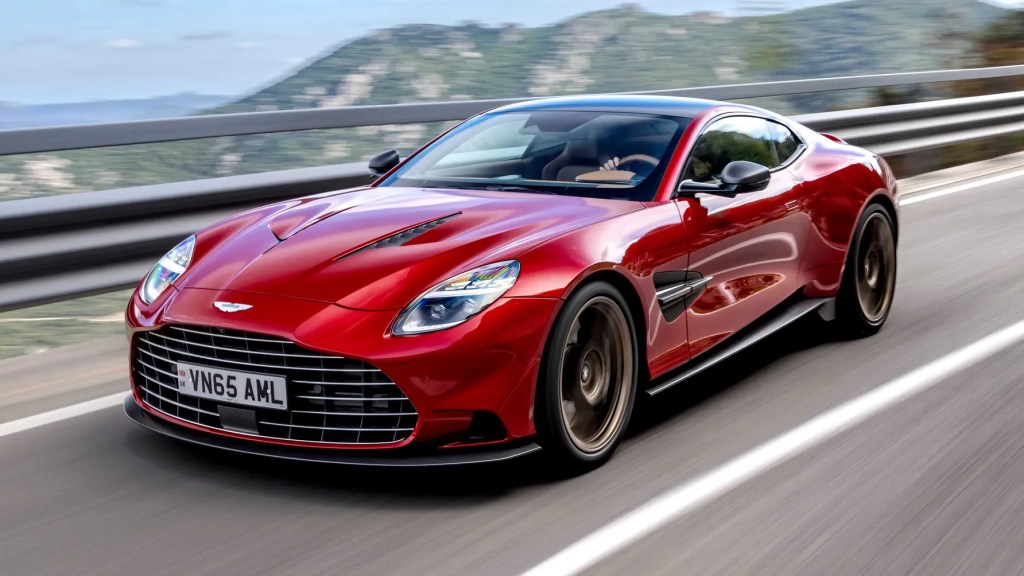
More model variants, as he recently said in an interview with Motor1, include the re-introduction of manual transmissions in their main production cars.
In addition, Hallmark suggests adding special versions and fewer occasional one-offs to drive the value of the special units. One such special is likely a convertible Valhalla supercar.
He also added that hybrid introduction to the core models is a necessary first step before diving into the EV market, “Our commitment is towards carbon neutral net zero. But to get there, we will add incremental products in the hybrid space before we get to full electric.”
But Aston Martin is ready for the future. He explained that every current model is built on platforms which can be manipulated “efficiently” to hold a battery or small electric motor for mild hybrid variants, which can be expected in the next 3-5 years.
There is only one EV planned before 2030. Just one. And that’s not a bad thing – because Aston Martin cannot afford to produce so many different powertrains all at once – and they will be able to scope the EV landscape going beyond 2030 as a litmus test before deciding to move to full electrification.

Most interestingly, Hallmark suggested Aston Martin’s beautiful V12 engines could stay beyond 2030. Although current global legislation would mean phasing out mass-produced V12s by 2028, low-volume units could survive beyond the end of the decade (mass-produced meaning core cars like the Vanquish, low-volume referring to special cars like the Valkyrie).
These changes will take some time, but Hallmark’s path towards a sustainable future will bring great benefits to both company and consumer, including more driver-focused luxury sports cars and sustainable, adaptable platforms for the brand to rely on through an overall tricky time in the automotive industry.
 MotorPost
Leave a comment